🔍 Read the full analysis: Saltimbocca Alla Romana: The Twenty-Minute Roman Classic on Mad Tasting
TL;DR
Saltimbocca alla Romana is a traditional Roman dish made from thin veal, prosciutto, and sage, cooked in butter and white wine in about 20 minutes. It exemplifies Roman culinary simplicity and quality ingredients. This article covers the dish’s history, authentic technique, and why it remains a beloved staple.
Saltimbocca alla Romana is a classic Roman dish that can be prepared in approximately twenty minutes, combining thin veal scaloppine, prosciutto, and fresh sage, sautéed in butter and white wine. Its quick preparation and emphasis on quality ingredients make it a favorite among both chefs and home cooks, exemplifying the minimal intervention philosophy of Roman cuisine.
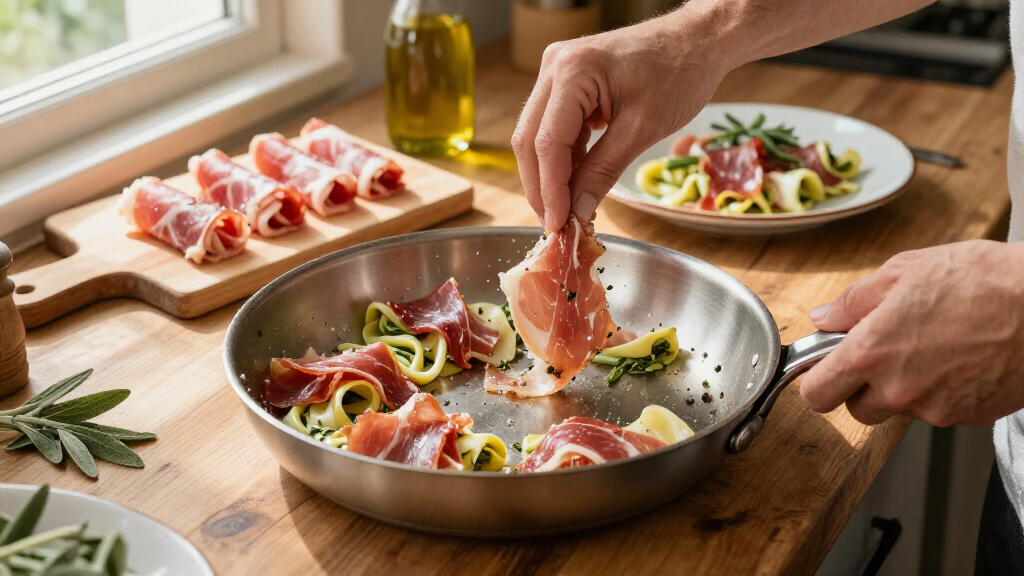
The dish originates from 19th-century Rome, with roots possibly traced back to Lombardy, and has become a staple in Roman trattorias. It features four key ingredients: paper-thin veal, Prosciutto di Parma or San Daniele, fresh sage leaves, and a sauce of butter and white wine. The preparation involves pounding the veal, layering it with prosciutto and sage, and quickly sautéing until crisp, then finishing with a wine and butter sauce. The entire process takes about twenty minutes, making it an accessible yet authentic Roman specialty.
Experts emphasize that the success of Saltimbocca depends heavily on ingredient quality—particularly the fresh sage, veal, and prosciutto. Substitutes like chicken or pork can be used, but authentic prosciutto and fresh sage are non-negotiable for true flavor. The dish is traditionally paired with Frascati wine, which complements its delicate flavors. Proper technique involves moderate heat, careful timing, and attention to browning to avoid burning the prosciutto or overcooking the veal.
Saltimbocca alla Romana: The Twenty-Minute Roman Classic
Thin veal, prosciutto, and fresh sage, sautéed in butter and white wine — a dish whose name means “jumps in the mouth,” and a masterclass in extracting maximum flavor from minimal ingredients.
Four Ingredients, Zero Compromise
The dish exemplifies the minimal-intervention philosophy of Roman cuisine: every component must stand on its own, because nothing is there to hide behind.
Paper-Thin Veal
Scaloppine pounded until delicate — seconds in the pan are all it needs. Chicken or pork cutlets work as substitutes.
Prosciutto DOP
Prosciutto di Parma or San Daniele with DOP designation. Non-negotiable for authentic curing and regional flavor.
Fresh Sage
Whole leaves pressed onto the prosciutto layer. Experts insist fresh sage is the single most decisive ingredient.
Butter + White Wine
A quick pan emulsion finishes the dish. Frascati traditionally; dry whites like Pinot Grigio also work.
From Board to Plate in Twenty Minutes
Moderate heat, careful timing, and close attention to browning — the prosciutto burns easily and the veal overcooks in seconds.
Pound the Veal
Flatten scaloppine between parchment until paper-thin and even.
≈ 5 minLayer & Secure
Top with prosciutto and a sage leaf; fasten with a toothpick.
≈ 4 minSauté Crisp
Sear in butter over moderate heat, sage-side down, until golden.
≈ 5 minFinish & Serve
Deglaze with white wine, mount with butter, serve immediately.
≈ 6 min“Jumps in the Mouth”: A Roman Institution
Saltimbocca’s origins trace to 19th-century Rome, with some food historians suggesting Lombard roots before the dish became emblematic of the Eternal City.
The Roman Trattoria Trinity
Carbonara · Cacio e Pepe · Saltimbocca — the holy trinity of Roman trattoria staples, reflecting the city’s philosophy of simple, flavorful food built on few, excellent ingredients.
Despite its simplicity, the recipe has remained remarkably unchanged over the last 150 years — a symbol of Rome’s culinary resilience and commitment to tradition.
In modern Rome it appears on virtually every trattoria menu, often prepared in minutes and served with a chilled glass of Frascati.
“Quality ingredients, minimal fuss, maximum flavor — that is Rome on a plate.”
The Saltimbocca PrincipleWhat Purists Allow — and What They Don’t
The core recipe is settled, but debates persist over substitutes. There is no official standard beyond the traditional preparation.
| Element | Traditional | Accepted Variation | Purist Verdict |
|---|---|---|---|
| Protein | Veal scaloppine | Chicken breast or pork cutlets | ~ Debated — works well, flavor differs |
| Prosciutto | Di Parma / San Daniele DOP | Other cured hams | ✗ Non-negotiable for true flavor |
| Sage | Fresh whole leaves | Dried sage | ✗ Rejected — fresh is essential |
| Wine (sauce) | Dry white / Frascati | Marsala | ~ Contested among traditionalists |
| Technique | Moderate heat, quick sauté | High-heat shortcuts | ✓ Fixed — prevents burning prosciutto |
| Service | Immediately, crisps intact | Reheated / make-ahead | ✗ Avoid — prosciutto loses texture |
Why Saltimbocca Still Defines Roman Cooking
A culinary ambassador of Rome’s historic identity — and a dish whose future looks firmly rooted in its past.
Today & Tomorrow
As interest in traditional Roman dishes persists, more home cooks and chefs are revisiting Saltimbocca’s roots, emphasizing ingredient quality and quick execution. Culinary tours and cooking classes increasingly feature the dish.
It will remain a trattoria staple, with ongoing debates about acceptable variations — but the core principles are expected to stay intact.
The Uncertainty Ledger
Lombard origins: plausible but unproven — food historians disagree.
Substitute authenticity: how much deviation impacts cultural authenticity remains unclear.
Modern modifications: chefs experiment, yet no official standard exists beyond the traditional recipe.
Answered by the Roman Pantry
Q1Can I make Saltimbocca with chicken instead of veal?
Yes — chicken breast or cutlets are common substitutes and work well with the traditional technique, though the flavor profile will differ slightly from veal.
Q2What wine pairs best with Saltimbocca?
Frascati is the classic pairing, but dry white wines like Pinot Grigio or Verdicchio also complement the dish nicely.
Q3How important is the quality of prosciutto?
Very important. Authentic Prosciutto di Parma or San Daniele with DOP designation ensures proper curing and regional authenticity, significantly impacting flavor.
Q4Can I prepare Saltimbocca ahead of time?
It’s best served immediately after cooking to preserve the crispness of the prosciutto and freshness of the sage. Reheating causes the prosciutto to lose its texture.
Why Saltimbocca Continues to Define Roman Cooking
Saltimbocca alla Romana exemplifies the Roman culinary principle of extracting maximum flavor from minimal ingredients. Its quick preparation and reliance on high-quality components make it a symbol of authentic Italian cooking accessible to home cooks. Its enduring popularity underscores the importance of tradition and ingredient integrity in Roman gastronomy, serving as a culinary ambassador of Rome’s historic and cultural identity.

Parmaschinken Riserva – PROSCIUTTO di Parma DOP LEPORATI mind. 24 Monate gereift am Stück- Gambero Rosso Qualität (1500gr vorderes Viertel)
- Awarded by Gambero Rosso: Top-rated Parmaschinken DOP
- Minimum 24 Months Aging: Extended maturation for rich flavor
- Premium Quality Selection: Carefully chosen pork leg
As an affiliate, we earn on qualifying purchases.
As an affiliate, we earn on qualifying purchases.
Historical Roots and Cultural Place in Rome
Saltimbocca’s origins date back to the 19th century, with some food historians suggesting it may have roots in Lombardy before becoming emblematic of Roman cuisine. The dish is part of the ‘holy trinity’ of Roman trattoria staples, alongside carbonara and cacio e pepe, reflecting the city’s philosophy of simple, flavorful food. Despite its simplicity, it has remained remarkably unchanged over the last 150 years, symbolizing Rome’s culinary resilience and commitment to tradition.
In modern Rome, the dish is a common feature on trattoria menus, often prepared quickly and served with a glass of Frascati. Its name, meaning ‘jumps in the mouth,’ captures the lively, bold flavors that characterize Roman cooking. The dish’s popularity endures because it embodies the city’s approach: quality ingredients, minimal fuss, maximum flavor.

Salbei 100g | Salbeiblätter getrocknet und geschnitten | Salbeitee | Salbei-Gewürz | vom Achterhof
- Ancient culinary herb: One of the oldest spices known
- Popular in Italian cuisine: Enhances dishes like Saltimbocca and Ossobuco
- Aromatic herb for seasoning: Ideal for meats, tomatoes, eggs, and pasta
As an affiliate, we earn on qualifying purchases.
As an affiliate, we earn on qualifying purchases.
Uncertainties About Variations and Authenticity
While the core ingredients and technique are well established, some variations exist, such as using chicken or pork instead of veal, or different wines like Marsala. The authenticity of these substitutes is debated among purists. Additionally, some chefs experiment with slight modifications, but there is no official standard beyond the traditional recipe. It remains unclear how much deviation from the original impacts the dish’s cultural authenticity.

Veal Varieties: 96 Popular Recipes for Every Occasion
As an affiliate, we earn on qualifying purchases.
As an affiliate, we earn on qualifying purchases.
Future Trends and Continued Tradition in Roman Cuisine
As interest in traditional Roman dishes persists, more home cooks and chefs are revisiting Saltimbocca’s roots, emphasizing ingredient quality and quick execution. Culinary tours and cooking classes increasingly feature the dish, reinforcing its status as a symbol of Roman culinary identity. The dish is also likely to remain a staple in Roman trattorias, with ongoing debates about acceptable variations, but the core principles are expected to stay intact.

by Amazon Weißwein Cuvee Lieblich Qualitätswein Rheinhessen 1L
- Wine Type: Lieblich Qualitätswein Rheinhessen
- Flavor Profile: Fruchtig, saftig, mild
- Taste Notes: Frischer, fruchtiger, harmonischer Weißwein with Zitrus
As an affiliate, we earn on qualifying purchases.
As an affiliate, we earn on qualifying purchases.
Key Questions
Can I make Saltimbocca with chicken instead of veal?
Yes, chicken breast or cutlets are common substitutes and work well with the traditional technique, though the flavor profile will differ slightly from veal.
What wine pairs best with Saltimbocca?
Frascati is the classic pairing, but dry white wines like Pinot Grigio or Verdicchio also complement the dish nicely.
How important is the quality of prosciutto?
Very important. Authentic Prosciutto di Parma or San Daniele with DOP designation ensures proper curing and regional authenticity, which significantly impacts flavor.
Can I prepare Saltimbocca ahead of time?
It’s best served immediately after cooking to preserve the crispness of the prosciutto and freshness of the sage. Reheating can cause the prosciutto to lose its texture.
Source: Mad Tasting