
🔍 Read the full analysis: Risotto Ai Funghi: Deep Mushroom Flavor Without Truffle Prices on Mad Tasting
TL;DR
Mad Tasting’s recipe guide describes how to make risotto ai funghi with affordable fresh mushrooms, short-grain rice and hot stock, finishing the dish with butter and Parmigiano Reggiano. It recommends browning mushrooms separately and adding them near the end; dried porcini can add depth, but are optional.
Mad Tasting’s risotto ai funghi guide outlines how home cooks can build a creamy, deeply savory mushroom risotto with affordable fresh mushrooms, short-grain rice and hot stock, without buying truffles. The method relies on browning mushrooms separately and finishing the rice off the heat with butter and Parmigiano Reggiano.
The guide recommends Arborio rice as an accessible, forgiving option, while Carnaroli tends to hold a firmer bite and Vialone Nano cooks relatively quickly. It advises against long-grain rice because it does not release starch in the same way. Fresh cremini or button mushrooms can supply the main flavor and texture; dried porcini are optional, used in a small amount for a more concentrated, woodsy note.
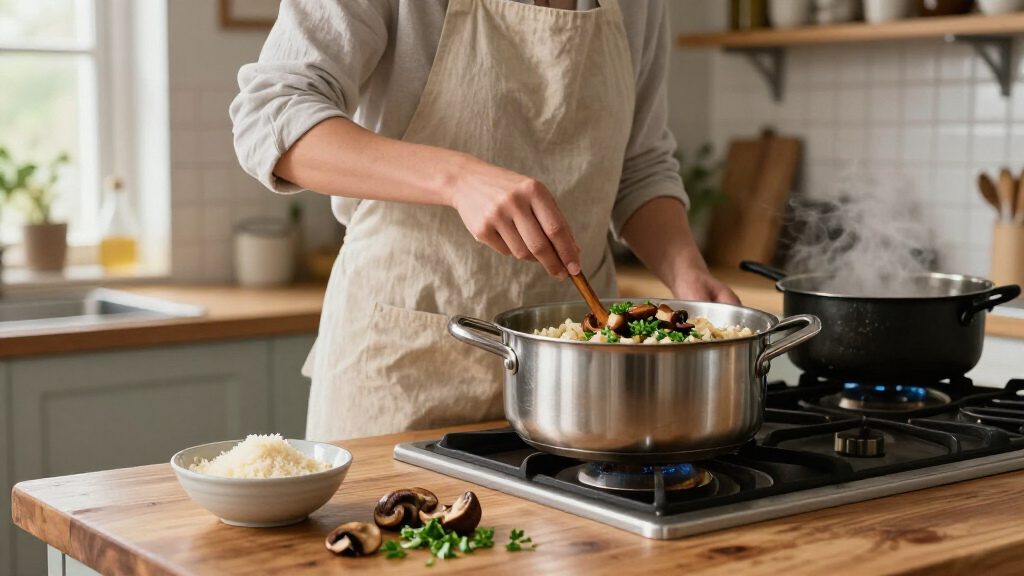
For the mushrooms, the guide says to use a roomy, hot pan and cook in batches if needed. They release moisture before browning, so crowding them can leave them pale and steamed rather than browned. Most of the cooked mushrooms go into the risotto near the end, with a few set aside to garnish. If using dried porcini, soak and chop them, then strain the soaking liquid carefully before adding it to the stock.
The rice cooks gradually: soften shallot in butter or olive oil, toast the rice briefly, then add hot stock in portions as the rice simmers. Stir frequently and taste as it cooks, stopping when the grains are tender with a slight firmness at the center. Fold in the mushrooms, take the pan off the heat, and finish with butter and finely grated Parmigiano Reggiano. The guide says the finished risotto should flow softly across the plate rather than sit as a stiff mound.
Kitchen Field Guide · Northern Italy
Risotto Ai Funghi: Deep Mushroom Flavor Without Truffle Prices
Everyday mushrooms, the right rice and patient stock additions build a creamy, savory risotto. The key is technique: brown the mushrooms separately, then finish the rice while it is still loose and flowing.
01 / Flavor without the splurge
Technique brings the depth
The guide’s practical point is simple: a deeply savory bowl does not depend on truffles. Browned everyday mushrooms bring flavor and texture, while gradual stock additions draw creaminess from short-grain rice.
Concentrate the mushrooms
Use a roomy, hot pan and cook in batches. Let released moisture evaporate so the mushrooms brown instead of turning pale and steamed.
Let rice release starch
Toast short-grain rice briefly, then simmer with hot stock added in portions. Stir frequently and taste as the grains cook.
Keep the texture flowing
Fold in most of the mushrooms near the end. Off the heat, stir in butter and finely grated Parmigiano Reggiano.
02 / Choose your rice
Three short-grain options
Each rice cooks a little differently. The guide presents Arborio as an accessible choice and recommends avoiding long-grain rice, which releases starch differently.
Arborio
A familiar, forgiving option for home cooks seeking a creamy result.
Carnaroli
Tends to hold a firmer center as it cooks in stock.
Vialone Nano
Cooks relatively quickly and is associated with Veneto.
03 / The cooking sequence
Build the bowl in stages
Keep the stock hot, add it gradually and use taste and texture to guide the finish. Timing and liquid needs vary with the rice, pan and heat.
Soften
Cook shallot in butter or olive oil until tender.
Toast
Add rice and toast briefly before the stock.
Simmer
Add hot stock in portions, stirring frequently.
Taste
Stop when tender with a slight firmness at the center.
Mantecare
Fold in mushrooms; finish off heat with butter and cheese.
04 / The balance
Texture comes from the method
The recipe guide builds creaminess with rice starch, stock and a finish of butter and cheese. It does not call for cream.
05 / At the table
Finish while loose
Trust the taste test
As the rice approaches tenderness, taste it instead of relying only on the package’s longest cooking estimate. Fold in the browned mushrooms, remove the pan from the heat, and stir in butter and finely grated Parmigiano Reggiano. The guide provides no measured cooking time, stock quantity or cost per serving.
06 / Quick answers
Risotto questions, answered
Are dried porcini required?
No. They are an optional flavor boost. Fresh cremini or button mushrooms can form the base.
Why brown mushrooms separately?
They release moisture first. A hot, uncrowded pan lets it evaporate so the surfaces can brown.
Which rice should I use?
Arborio is accessible and forgiving; Carnaroli tends to keep a firmer bite, while Vialone Nano cooks relatively quickly.
Does the method need cream?
No. Short-grain rice releases starch as it cooks with stock; butter and Parmigiano Reggiano finish the dish.
A Lower-Cost Route to Mushroom Flavor
The recipe’s practical point is that mushroom flavor does not depend on truffles. Browning concentrates the flavor of everyday mushrooms, while short-grain rice and gradual stock additions create the dish’s creamy texture. That gives cooks a way to make a satisfying meal from ingredients commonly found at a grocery store.
The method also separates texture from seasoning: fresh mushrooms contribute tender pieces and browned edges, while a small amount of dried porcini can deepen the overall flavor. Since porcini are presented as an optional addition, the guide’s approach works without them. The result depends more on cooking technique and the rice choice than on a costly specialty ingredient.
As an affiliate, we earn on qualifying purchases.
Rice, Mushrooms and the Method
Risotto ai funghi is a northern Italian rice dish centered on mushrooms and the starch released as short-grain rice cooks. Vialone Nano is associated with Veneto, while Arborio is a familiar option for home cooks. The guide frames the dish as a gradual cooking process: rice absorbs hot stock in stages, and frequent stirring helps release starch.
The supplied source is a recipe guide, not a report of a restaurant launch, price change or new culinary study. It offers general cooking advice and does not provide a publication date, tested cost breakdown or measurements for a complete recipe. Its central comparison is culinary: careful browning and an appropriate rice can create depth and creaminess without truffles.
“Porcini are a flavor boost, not an entry fee.”
— Mad Tasting
As an affiliate, we earn on qualifying purchases.
Costs and Cooking Times Vary
The source does not give a complete ingredient list with quantities, a measured cost per serving or a direct price comparison with truffles. It also says cooking time and stock needs vary with the rice, pan and heat, so it does not establish one exact timing or liquid amount. The guide’s claim that the method can deliver deep flavor is cooking advice, not a reported or independently measured result.
As an affiliate, we earn on qualifying purchases.
Finish and Serve While Loose
As the rice approaches tenderness, taste it rather than relying only on the package’s longest cooking estimate. Fold in the browned mushrooms, remove the pan from the heat, and stir in butter and Parmigiano Reggiano. Serve promptly while the risotto still moves softly on the plate; the source offers no further reported development beyond these serving instructions.
As an affiliate, we earn on qualifying purchases.
Key Questions
Do you need dried porcini for mushroom risotto?
No. Mad Tasting describes dried porcini as an optional flavor boost. Fresh cremini or button mushrooms can form the base of the dish.
Which rice does the guide recommend?
Arborio is presented as accessible and forgiving. Carnaroli tends to keep a firmer bite, while Vialone Nano cooks relatively quickly. The guide advises using short-grain risotto rice rather than long-grain rice.
Why brown the mushrooms separately?
Mushrooms first release moisture. Cooking them in a roomy hot pan, in batches if necessary, lets that liquid evaporate so their surfaces can brown instead of steam.
Does risotto need cream?
The guide’s method does not call for cream. It builds a creamy texture by cooking short-grain rice with stock in stages, then finishing off the heat with butter and finely grated Parmigiano Reggiano.
Source: Mad Tasting