
🔍 Read the full analysis: Cioccolato Di Modica: Grainy, Ancient, And Worth Seeking Out on Mad Tasting
TL;DR
Cioccolato di Modica is a Sicilian chocolate known for its firm, grainy texture, created by working cocoa mass and sugar without fully dissolving the sugar. The EU granted the product a Protected Geographical Indication in 2018; that mark can help shoppers identify chocolate made under its protected specification. Its tradition reflects older influences, but the present-day recipe should not be described as unchanged since antiquity.
Cioccolato di Modica, a chocolate made in southeastern Sicily, is distinguished by a firm, crystalline texture that comes from working cocoa mass with sugar without fully dissolving the sugar. The European Union granted the product a Protected Geographical Indication in 2018, giving shoppers a label to look for, while its history calls for care: older influences are part of the tradition, but the modern recipe cannot be presented as unchanged since antiquity.
Unlike a smooth bar designed to melt evenly, Modica chocolate retains perceptible sugar crystals. The result is typically dry and crumbly rather than creamy. As the chocolate is chewed, sweetness and cocoa flavor can arrive in distinct impressions. That texture is a defining feature, not evidence that the bar has been stored or made incorrectly.
Traditional versions generally use cocoa mass and sugar, without added cocoa butter, according to the supplied consumer guide. Makers also produce flavored varieties, including cinnamon, vanilla, chili and citrus. These additions change the aroma and balance, so shoppers should read the ingredient and allergen labels rather than assume every bar has the same recipe or is suitable for a particular diet.
The guide advises looking for the full name Cioccolato di Modica IGP and the EU’s Protected Geographical Indication mark. The designation ties the protected product to a defined area and specification. It is a practical way to distinguish certified product from packaging that merely refers to Sicily or Modica; it does not mean every certified bar tastes identical.
Cioccolato di Modica Grainy, ancient, worth seeking out
This firm, crystalline chocolate stands apart from smooth bars. Its tradition has older influences, but the modern recipe is not proven unchanged since antiquity.
Why the texture is grainy
Sugar crystals remain perceptible in the finished chocolate.
The sugar is not fully dissolved into the cocoa mass.
The result is typically dry and crumbly rather than creamy.
What the IGP mark tells shoppers
Look for the full designation and EU mark when comparing bars.
- A product tied to a defined area and specification
- Certified Cioccolato di Modica IGP
- Every bar tastes identical
- Every variety suits a particular diet
Choose and serve with care
Recipes vary, so check each package for ingredients and allergens.
Cocoa and sugar
Traditional versions generally use cocoa mass and sugar.
Aromatic varieties
Cinnamon, vanilla, chili and citrus change the aroma and balance.
Tell the history accurately
Modica is in southeastern Sicily, in the province of Ragusa.
- Older influences and historical connections are part of the tradition.
- The available material does not prove an uninterrupted recipe from antiquity.
How the Texture Shapes Each Bite
The chocolate offers a clear alternative to the smooth, creamy texture many consumers associate with a conventional bar. Its grainy bite and concentrated cocoa character make the way it is produced directly noticeable to the person eating it. For travelers and shoppers, understanding that difference can help set expectations: a dry, crystalline mouthfeel is characteristic of the style, not necessarily a defect.
The geographical indication also gives consumers a specific label to check when buying a souvenir or comparing products. Reading the full designation and the package details can help establish whether a bar is certified and what ingredients it contains. The mark is useful, but it is not a guarantee of an individual flavor preference, identical ingredients across varieties or suitability for people with allergies.
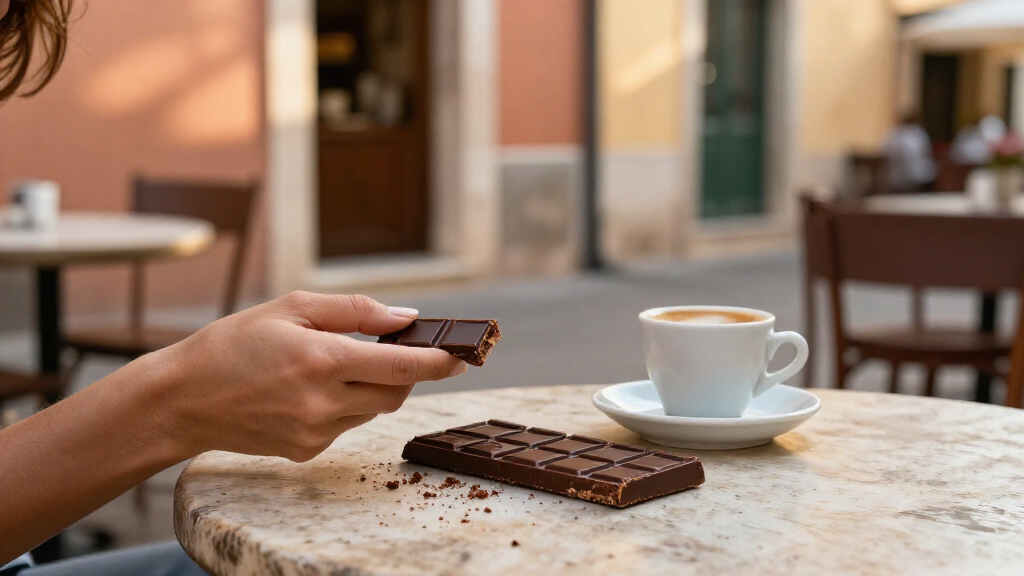
Serving can affect the experience. The source guide recommends small pieces at room temperature, allowing the cocoa aroma to open as the chocolate softens slightly. It can be served with espresso or fruit, or used in desserts; its firmer, grainier structure means it will not behave exactly like a smooth chocolate bar.
Sicilian Tradition, Carefully Told
Modica is in the province of Ragusa in southeastern Sicily. The tradition is associated with older chocolate-making influences and historical connections between Spain, the Americas and the movement of cacao and chocolate-making knowledge. Those links help place the practice in a broader history, but they do not establish that a recipe now sold in Modica has been followed without change since ancient times.
Cacao originated in the Americas and reached Europe after European contact. The guide cautions against describing today’s Modica chocolate as an unchanged ancient recipe. Similarities to older Mesoamerican practices can offer context, but resemblance alone does not prove a direct, uninterrupted line from a particular historical formula to modern production. Recipes, equipment, tastes and production rules can change as a food tradition develops.
The EU granted Cioccolato di Modica IGP status in 2018. That designation provides a present-day framework for identifying the protected product. It is distinct from the broader historical story: certification says something about the product’s geographical indication and specification, not that its recipe has remained identical over centuries.
What the Historical Record Establishes
The supplied material does not give a detailed production specification, a full account of how the recipe changed over time or named historical records proving a direct line from an ancient chocolate method to the present product. It supports describing older influences and historical connections, but not claiming that today’s recipe is unchanged from antiquity.
Individual bars can also differ. The source does not identify particular manufacturers or products, and ingredients vary with flavorings and production choices. Shoppers should consult each package for ingredients and allergen information; the general description of a traditional cocoa-and-sugar base is not a substitute for a product label.
What Shoppers Should Check
When choosing a bar, check for the full Cioccolato di Modica IGP name and EU mark, then read the ingredient list and allergen statement. A plain version can make the cocoa-and-sugar texture easier to assess; a cinnamon, vanilla, chili or citrus bar offers a different aromatic profile. The available source material does not identify a new release, pending regulatory decision or other scheduled development.
For serving, follow the guide’s advice to offer small pieces at room temperature. With espresso or fruit, or in a dessert, the bar’s firm texture may remain more noticeable than in a smooth chocolate. The practical next step for consumers is to compare labels and varieties while treating the product’s layered history accurately: distinctive and rooted in tradition, but not demonstrably unchanged since antiquity.
Key Questions
Why is Cioccolato di Modica grainy?
Its cocoa mass and sugar are worked without fully dissolving the sugar, leaving crystals that can be felt in the finished chocolate.
What does the IGP mark mean?
The EU’s Protected Geographical Indication identifies a product associated with a defined area and specification. The designation for Cioccolato di Modica was granted in 2018.
Is the recipe unchanged since antiquity?
The supplied guide does not support that claim. It describes older influences and historical connections, while cautioning that the modern recipe should not be called unchanged since antiquity.
What ingredients should shoppers expect?
Traditional versions generally use cocoa mass and sugar; some varieties include ingredients such as cinnamon, vanilla, chili or citrus. Check the package for the exact ingredients and allergen information.
How is it best served?
The guide recommends small pieces at room temperature, served on their own or with espresso or fruit. Its texture is firm and crystalline rather than creamy.
Source: Mad Tasting