TL;DR
A Thanksgiving roasting pan is a sturdy, oven-safe pan used to roast large foods such as turkey. Choose one that fits both the bird and your oven, has stable handles and enough depth for drippings, and suits your cleaning and gravy-making plans. A rack helps lift the turkey above the juices, while a sturdy sheet pan can support a flimsy disposable pan.
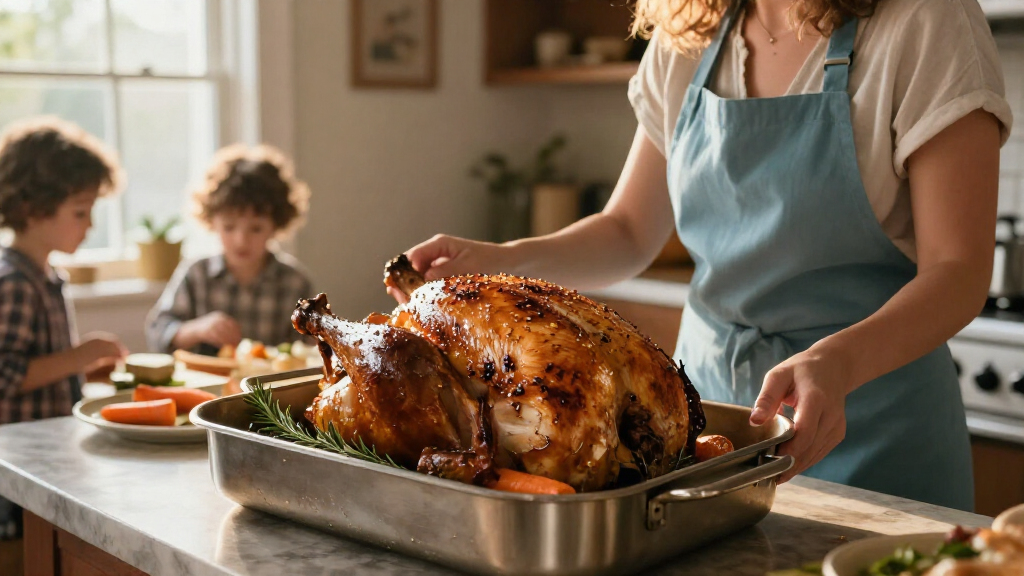
At the last Thanksgiving I hosted, the turkey fit in the oven—but the roasting pan’s handles nearly kissed the oven walls. That tight squeeze made it hard to slide the pan in and out, and I had to clear the counter before lifting it, juices wobbling under the bird.
Thanksgiving roasting pans have a big job: they hold a heavy turkey, catch savory drippings, and need to fit inside your oven with room to spare. A roasting pan is a sturdy, oven-safe pan used to roast large foods. The useful details are its interior size, construction, depth, handles, and whether it comes with a rack.
This guide walks you through those choices with practical examples, from buying a reusable stainless-steel pan to making a disposable one safer to handle. You’ll also get tips for using drippings, cleaning stuck-on bits, and checking product claims before you put a pan on the stovetop.
Measure the pan’s interior and your oven’s usable space, including room for the handles.
Choose sturdy construction and comfortable handles for a heavy turkey and hot drippings.
Use a rack to lift the turkey above the juices, or support it on sturdy vegetables.
Support disposable aluminum pans with a rigid sheet pan before filling or carrying them.
Check manufacturer instructions before using a pan on the stovetop, under the broiler, or in the dishwasher.
Choose a pan that fits your turkey and oven
A Thanksgiving roasting pan should leave space around the turkey and still fit your oven with room for air to circulate. Check the pan’s interior dimensions, your bird’s size, and the oven’s usable space before you buy. A pan that fits only when wedged against the oven walls can be awkward to load and remove, and restricted airflow may make heating less even.
Think of the pan as a frame for the bird: it needs to hold the turkey securely without crowding the oven’s heat. Measure the inside of your oven from rack to rack and side to side, then compare those numbers with the pan’s outside dimensions, including handles. The interior determines whether the bird and drippings fit; the exterior determines whether you can slide the pan in and out. Don’t rely on listed capacity alone, since two pans advertised for similar turkeys can have very different shapes.
A pan that is too small can press the bird against its sides, leaving little room to maneuver or collect juices. An oversized pan may be cumbersome, take up storage space, and leave a smaller bird sitting in a broad area where drippings can spread thinly. If you roast a large turkey once a year but have a compact oven, a more modest reusable pan or a supported disposable one may be the practical choice. The right size depends on your kitchen as much as the menu.
Before Thanksgiving Day, try sliding the empty pan onto the oven rack. This checks more than whether it technically fits: you can see whether the handles catch, whether the rack moves freely, and whether you have enough clearance to lift the pan. Finding a tight turn while the pan is empty is far easier than discovering it with a hot, heavy turkey inside.
Pick a material that matches how you cook
Stainless steel is durable and often practical for regular use; aluminum heats efficiently but can be less rigid when thin; and coated pans can be easy to clean, though their care rules vary. Those differences affect what the pan is like in use: a rigid pan is easier to carry when loaded, while a surface that releases food readily can save scrubbing afterward. Check the manufacturer’s instructions for temperature limits, suitable utensils, and whether the pan can go on the stovetop. “Oven-safe” by itself does not mean “broiler-safe” or “induction-compatible.”
Imagine making gravy right after the turkey comes out. A stainless-steel pan may let you cook on the stovetop and scrape browned bits into the gravy, but only if the manufacturer allows that use and the pan suits your burner. If it does not, transferring the drippings to a saucepan adds a step but keeps you within the pan’s intended use.
Coated pans may release food more easily, which can help when sticky juices cling to the sides. That convenience comes with care requirements: metal utensils or harsh scrubbers may damage some finishes, and a damaged coating can make the pan harder to use as intended. Aluminum heats quickly, but a thin model can flex under a large bird. That flexibility may make the pan less comfortable to carry, so check its rigidity and handle attachment rather than judging by weight alone.
There’s no universal winner. If you roast often and want a pan for vegetables and other large cuts of meat, durability and versatility may justify a higher price and more storage space. If you cook one holiday turkey and have limited storage, a simpler pan may suit your needs better, provided it fits your oven and can be handled safely. Choose for the tasks you will actually use it for, not just the longest feature list.
Use sturdy construction and handles to move a heavy bird
A roasting pan needs a strong base and secure handles because a cooked turkey and its drippings create a heavy, shifting load. A firm base helps the pan resist flexing, while secure handles give you a stable grip when the weight is far greater than it was at the store. Look for handles you can grip with dry oven mitts. Riveted handles can help, and wide, upright handles often give your hands more room.
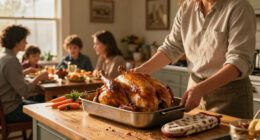
Picture carrying the pan from oven to counter: the turkey blocks part of your view, hot liquid rolls at the edges, and a narrow handle can twist in your grip. The shape and placement of handles matter because they determine whether you can hold the pan level. A firm two-handed hold and a clear landing spot make the transfer easier. Clear a stable space before opening the oven, and avoid carrying a full pan by a thin disposable rim.
If you choose a disposable aluminum pan, place it on a sturdier rimmed sheet pan before adding the turkey. The sheet pan supports the foil underneath, so it does not have to bear the whole weight while you move it. This reduces the chance of the foil flexing or buckling, which could spill hot juices. Even if the disposable pan seems stiff when empty, the turkey and liquid can change how it behaves.
Do not rush the lift. Use dry mitts, hold both handles, and ask someone nearby to open the oven door or clear the route if needed. A slip can spill hot drippings, so safe handling starts before the pan leaves the rack. If the load feels difficult to control, stop and get help rather than trying to compensate with a hurried or one-handed lift.
Choose a rack or build a vegetable cradle
A rack lifts the turkey above the drippings, helping the underside brown and keeping it from sitting directly in liquid. That separation matters because a surface in contact with juices tends to cook differently from one exposed to hot oven air. You do not have to own a rack: sturdy vegetables can support the bird and give the drippings extra flavor. Either method works, though the turkey’s contact with the juices will affect browning and texture.
Imagine a bed of thick-cut carrots, celery, and onion beneath the turkey. The vegetables act like a simple cradle, holding the bird above the pan bottom while their browned edges scent the kitchen. They may also flavor the drippings for gravy. Cut the pieces large enough that they will not collapse quickly under the turkey’s weight; if they soften and flatten too soon, the bird can settle into the juices.
A rack can make the underside easier to brown and can be simpler to lift out, depending on its shape. It also keeps vegetables from becoming a required part of the setup. But the rack needs to fit the pan and should be made for oven use. If your pan includes a removable rack, check how it sits and whether it is easy to clean before the holiday; a rack that rocks or is difficult to remove may add hassle without improving your routine.
For a rack-free method, arrange vegetables in an even layer rather than piling them into a narrow mound. An even base spreads the bird’s weight and leaves room for drippings to collect. If you prefer the turkey to sit directly in juices, that approach can still work, but expect a softer underside and less browning where the bird touches the liquid. Choose the setup based on the texture you want and how much cleanup you are willing to do.
Use the pan for more than Thanksgiving turkey
A reusable roasting pan can handle large roasts, ham, and vegetables as well as turkey, so its value grows if you use it beyond one holiday. Some models can move from oven to stovetop for gravy, but only when the material and design permit it. Check the product instructions before using the pan on any burner; this affects whether the pan can do double duty as a cooking vessel or is mainly for roasting and collecting drippings.
On a cold Sunday, you might roast potatoes and carrots in the same pan, then use it again for a large cut of meat. A broad roasting area gives vegetables space to brown instead of steam in a heap, though a pan that is much larger than the amount of food can make it less convenient to store and handle. A rack can also help with foods that benefit from sitting above their juices.
Before buying, think about storage and how often you will use the extra features. A tall pan with a bulky rack may do many jobs but occupy a lot of cupboard space. A lighter model might be easier to store, yet less rigid when loaded. Some newer designs include removable racks, stronger handles, or bases intended for stovetop and oven use; features vary by brand, so check each claim individually rather than assuming one feature guarantees another.
A versatile pan is useful only if you can handle and clean it comfortably. If you plan to make gravy in the roasting pan, stovetop compatibility can save a transfer and help you use the browned bits directly. If the pan is not compatible, a saucepan works, though it adds a dish to wash. If you mainly want a vessel for one annual turkey, you may prefer a simpler choice that fits your oven and budget.
Get the pan ready and move it safely
Prepare the work area before roasting: check the pan’s instructions, set out a rack or vegetables, and clear a stable landing spot. When the turkey is done, use dry oven mitts and lift with both hands. A full pan can slosh, so move slowly and keep the route clear. Preparing these details ahead of time reduces the number of decisions you have to make while handling a hot, heavy pan.
- Check the fit. Make sure the pan and handles sit comfortably inside the oven.
- Set up support. Place the rack in the pan or arrange sturdy vegetables in an even layer.
- Make a landing space. Clear a heat-safe spot before opening the oven.
- Lift steadily. Use dry mitts, grip both handles, and get help if the load feels awkward.
- Handle drippings carefully. Confirm stovetop compatibility before making gravy in the roasting pan.
These steps matter most when the pan is heavy or the oven is a tight fit. Clearing a counter before roasting ends means you do not have to balance a hot pan while moving serving dishes out of the way. Keeping a disposable pan on a rigid sheet pan during loading and removal also means the foil is supported at the moments when its contents make it most likely to bend.
Also follow the turkey recipe’s food-safety directions for cooking and storage. Wash hands and surfaces that contact raw poultry, keep raw juices away from ready-to-eat foods, and refrigerate leftovers promptly according to food-safety guidance. The roasting pan helps with cooking; it does not replace safe handling.
Loosen stuck-on drippings without damaging the finish
To clean stuck-on drippings, soak the pan in warm water with dish soap, then loosen residue with a suitable nonabrasive scrubber. Check the manufacturer’s care instructions before using abrasive cleaners or a dishwasher cycle. Soaking gives water and soap time to soften the residue, reducing the need for force that could scratch or damage some finishes.
For example, after gravy-making, browned fond may cling to the bottom. Let the pan cool, then add warm soapy water and give it time to loosen the residue. The pan should not go straight from a hot oven into cold water; a sudden temperature change can stress the metal and contribute to warping. Waiting until it is safe to handle protects you as well as the pan.
Care depends on the finish. A coated surface may need a softer sponge because scratches can compromise its easy-release surface, while a durable stainless-steel pan may tolerate more vigorous cleaning if its instructions allow it. The rack can have its own care requirements, so check that separately rather than assuming it shares the pan’s dishwasher rating.
Cleaning soon after the meal can save effort because drippings are less likely to harden, but there is no need to attack a hot pan. Let it cool enough to handle safely, soak it, and give the drippings time to soften. A well-cared-for pan is ready for next year’s turkey—or the next pan of roasted vegetables.
Frequently Asked Questions
What size roasting pan do I need for a Thanksgiving turkey?
Choose a pan that leaves some space around the turkey and fits inside your oven with room for air to circulate. Check both the pan’s interior dimensions and its outside dimensions, including handles. Try fitting the empty pan in your oven before buying.
Do I need a rack to roast a turkey?
No. A rack lifts the turkey above the drippings and can help the underside brown, but sturdy vegetables can support it too. Carrots, celery, and onion make a useful vegetable cradle and can flavor the pan juices.
Can I roast a turkey in a disposable aluminum pan?
Yes, but a thin disposable pan can bend under the weight of a turkey and its juices. Set it on a sturdy rimmed sheet pan before filling it, and keep that support underneath while moving the pan. Do not carry the foil pan by itself when it is full.
Is stainless steel or nonstick better for a roasting pan?
Stainless steel is durable and may suit stovetop gravy-making if the manufacturer permits it. Coated pans can release food easily and simplify cleanup, but their temperature and utensil limits vary. Choose based on how you cook and follow the product’s care instructions.
Can I make gravy in my roasting pan?
Often, if the pan is rated for stovetop use. You can use the drippings and browned bits to build flavor, but check the manufacturer’s instructions first. If the pan is not stovetop-safe, transfer the drippings to a saucepan.
How do I keep a roasting pan from warping?
Choose a sturdy pan, follow its care instructions, and avoid sudden temperature changes. Let a hot pan cool before washing it; placing it straight into cold water can stress the metal.
Conclusion
Choose your Thanksgiving roasting pan by checking the fit first, then weighing construction, handles, material, and rack options against how often you’ll use it. Set up a secure support and a clear landing place before the turkey goes into the oven.
On the big day, a steady pan means you can focus on the golden skin, the savory drippings, and the people waiting around the table.