
TL;DR
Good Housekeeping compared three microwave popcorn bags in a five-second shake test and found that they rattled differently. The report says the sound may reflect how freely kernels move, but it cannot reliably reveal a product’s fat, calories or sodium; nutrition labels and ingredient lists are more useful.
A Good Housekeeping comparison found that three microwave popcorn bags made different sounds when shaken, but the five-second test cannot establish which product is more nutritious. The report’s dietitian says the shake can be a quick observation about how kernels move inside a bag; shoppers seeking information about sodium, saturated fat or ingredients should check the Nutrition Facts panel and ingredient list.
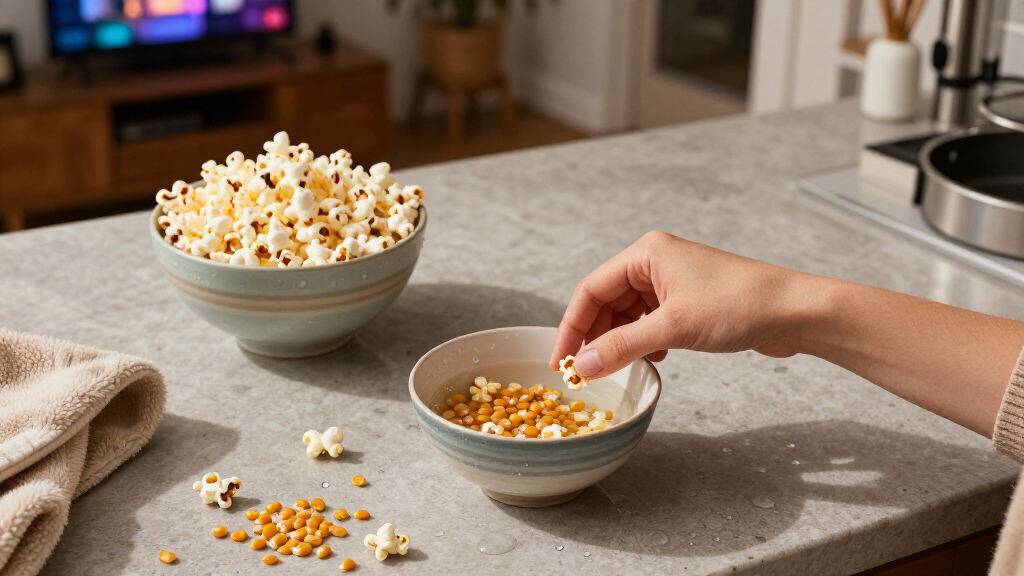
In a recent episode of Good Housekeeping’s Quality Tested series, the team shook three varieties before popping them. The 365 by Whole Foods Market No Oil or Salt Added bag had kernels that rattled freely. Smash Kitchen Organic Sea Salt Popcorn moved less, though kernels could still be heard shifting. The AMC Theatres Classic Butter Microwave Popcorn bag made no audible movement during the test.
The report said those differences appeared consistent with the products’ ingredients: the 365 variety had no added oil or salt, Smash Kitchen contained some palm oil and salt, and AMC’s product was seasoned with butter flavoring. The team also cut open the bags to inspect their contents before popping them. It did not microwave the cut bags.
Good Housekeeping stressed that these observations do not prove that the quietest bag has more fat, calories or sodium. Amount of popcorn, how tightly it is packed and where seasoning sits can all affect movement. The report provided no measured sound levels or nutritional analysis based on the shaking, so the test is best treated as a demonstration, not a way to rank products by nutrition.
What the Shake Cannot Measure
The test is a low-effort way to notice that microwave popcorn products differ, but sound is not a substitute for nutrition information on the package. A quiet bag may reflect how its contents are packed or seasoned; it does not, by itself, establish a higher amount of any nutrient. Treating the sound as a health score could lead shoppers to draw conclusions the comparison does not support.
The report’s registered dietitian recommends comparing products using the same serving size. For her own choices, she looks for less than 50 milligrams of sodium and ideally no more than 2 grams of saturated fat per cup of popped popcorn, alongside a short ingredient list. Those are her personal benchmarks, not universal standards or medical advice. The practical takeaway is to compare labels on an equal serving basis and choose according to individual preferences and needs.
Popcorn itself does not have to be plain to fit into a balanced diet, the report says. The dietitian describes it as a snack containing fiber and antioxidants, while noting that a basic salty popcorn product would not typically need added sugar. Checking the label gives consumers a more direct basis for comparing products than shaking the bag.
As an affiliate, we earn on qualifying purchases.
How the Three Bags Compared
Microwave popcorn can include kernels as well as oil, salt, flavorings and other ingredients. Those additions may affect how contents shift around before cooking, but the Good Housekeeping report describes only a small comparison of three named products. It does not establish that all oil-free bags will rattle more or that all heavily seasoned bags will stay silent.
The reporter, a registered dietitian, said she already uses ingredient lists and nutrition panels when comparing popcorn and wanted to see whether shaking could reveal anything useful. In the test, the team opened the packages for a visual check, then compared the contents before popping. The report’s own qualification is central: movement is an observation, not a measurement of calories or nutrients.
As an affiliate, we earn on qualifying purchases.
Limits of the Small Comparison
The source describes a comparison of three products, but does not give a full testing protocol, repeat trials, sound measurements or laboratory results. It does not establish how consistently bags of the same product would sound, or whether package size and packing differences affected these particular observations.
The report also does not provide a complete nutrient-by-nutrient comparison of the three products. It says the shake test cannot reliably determine fat, calories or sodium, and the observations should not be treated as proof about those values. The original report’s publication date is not included in the supplied material, so its precise timing cannot be stated here.
organic sea salt microwave popcorn
As an affiliate, we earn on qualifying purchases.
As an affiliate, we earn on qualifying purchases.
Check Labels Before Choosing
No further test or follow-up is specified in the source material. For shoppers choosing popcorn, the next useful step is to compare Nutrition Facts panels using the same serving size, then review the ingredient lists. The dietitian’s personal benchmarks—under 50 milligrams of sodium and ideally 2 grams or less of saturated fat per cup popped—can be used as her stated preferences, not as mandatory limits.
A shake can still be a quick curiosity test before movie night, provided its meaning is kept narrow: it shows whether contents seem to shift, not what their nutrition profile is. The source offers no basis for ranking the three products overall or naming one as the healthiest.
microwave popcorn nutrition facts low saturated fat
As an affiliate, we earn on qualifying purchases.
As an affiliate, we earn on qualifying purchases.
Key Questions
What did the five-second popcorn shake test find?
In Good Housekeeping’s comparison, the 365 by Whole Foods Market bag rattled freely, Smash Kitchen Organic Sea Salt Popcorn moved less, and the AMC Theatres Classic Butter bag made no audible movement.
Does a quieter popcorn bag contain more fat or sodium?
Not necessarily. The report says packing, the amount of popcorn and seasoning distribution can affect movement. Sound alone cannot establish fat, calories or sodium.
How should I compare microwave popcorn nutrition?
Compare products using the same serving size, then check the Nutrition Facts panel and ingredient list. The dietitian featured in the report uses personal benchmarks of less than 50 milligrams of sodium and ideally 2 grams or less of saturated fat per cup popped.
Is plain popcorn the only nutritious choice?
No. The report says popcorn can fit into a balanced diet and contains fiber and antioxidants. Its dietitian says consumers do not necessarily need to choose the plainest variety; package details help clarify what is added.
Source: rss