TL;DR
Honey gift sets bundle one or more honeys with tasting notes, serving tools, or complementary items such as tea or cheese. Choose a set by checking its flavors, jar sizes, producer and origin details, ingredients, and any household needs; never give honey to a child under 12 months.
A honey gift set can turn an ordinary spoonful into a tasting worth talking about. One jar may be pale and gentle; the next, dark and bold enough to stand up to sharp cheese. That contrast makes a small box feel like a tour of a beekeeper’s landscape.
Honey gift sets bundle one or more honeys with complementary items or presentation. A set might include small jars from different floral sources, a wooden dipper, edible honeycomb, tea, preserves, or beeswax products. You’ll learn how to choose a set that fits the recipient, read origin and processing labels, and spot useful pairings without being distracted by a pretty box.
A good gift should also work for the household that receives it. Check jar sizes, ingredients, storage advice, and food-safety details before you buy. Honey must never be given to children under 12 months, and any added foods call for a quick allergen check.
Choose a mild honey for familiar uses or a clearly described sampler when you do not know the recipient’s preferences.
Check each jar’s net weight, producer, origin, floral source, ingredients, and storage advice.
Match pairings to flavor: mild honey suits tea and yogurt; darker honey can stand up to strong cheese and savory dishes.
Crystallization is natural; gently warm a closed jar in warm water if you want a runnier texture.
Never give honey to a child under 12 months, and review allergens in every added food.
What a honey gift set can include—and why the details matter
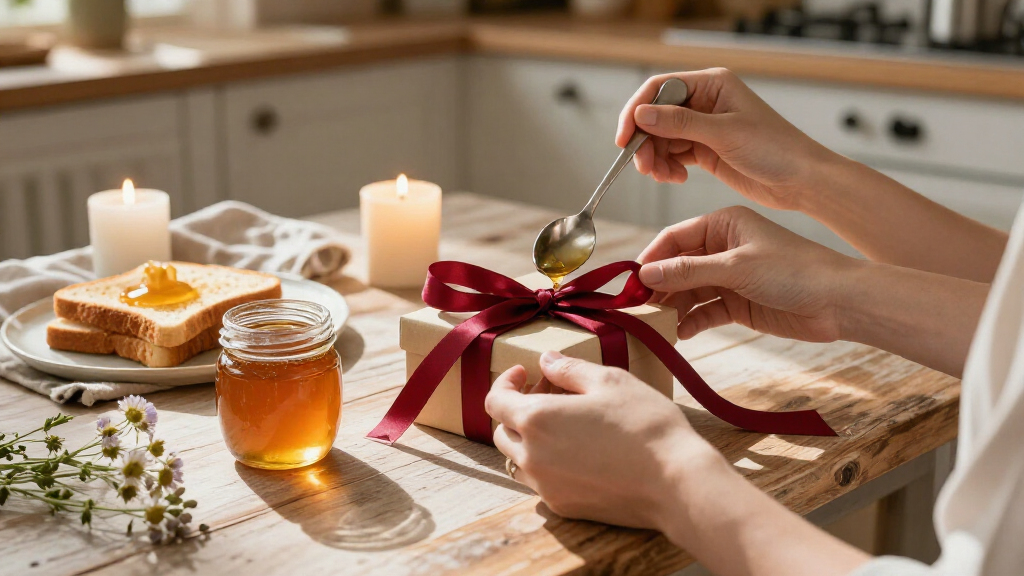
A honey gift set is a collection of honey jars or honey paired with related items, presented as one gift. The set could be a sampler of three floral varieties, a larger jar with a dipper, or a box with honeycomb and tea. The point is to make honey easier to taste, serve, or share.
For example, a housewarming box might pair a mild honey with tea and a small wooden dipper. A tasting set might instead include three small jars and notes describing each one. Those details change the experience: the first is ready for a quiet cup of tea, while the second invites the recipient to compare flavors at breakfast.
Think of a sampler like a set of paint swatches. Each small jar lets you try a different shade before choosing a favorite. Floral source often shapes the flavor: clover is commonly mild, orange blossom can be floral and citrusy, and buckwheat is typically dark and robust. Flavor still varies with region, season, and producer, so tasting notes help set expectations without promising every jar will taste exactly the same.
Presentation matters, but check what sits behind it. Look for the net weight of each jar, the producer, and clear descriptions of what’s included. A tall box can make a few tiny jars look generous; a simple three-jar set with honest weights may offer more honey and a better tasting experience.
Products Worth Considering

Jamie's Hive to Table Infused Honey Gift Set – Hot Lemon and Cinnamon Flavors 1,020.6 g Squeeze Bottle – 100% Natural Raw Honey
ROHER & UNGEFILTERTER HONIG Unser ungefilterter Rohhonig stammt von verantwortungsvollen Imkern, die die Gesundheit und das Wohlergehen ihrer…
As an affiliate, we earn on qualifying purchases.
Match the flavors to the person who will open the box
Honey gift sets are easiest to choose when you start with how the recipient eats. Pick a familiar, mild honey for someone who likes toast and tea, and a sampler with contrasting flavors for a curious cook. If you’re unsure of their preferences, smaller jars offer variety without asking them to commit to a large jar of a flavor they may not enjoy.
Imagine giving a gift to a friend who makes yogurt bowls every morning. A mild floral honey and a small jar of creamed honey could suit their routine, while a strong buckwheat variety might overpower the fruit they usually add. For a friend who cooks, a more robust honey could be useful in marinades, glazes, or dressings.
Use this short checklist to narrow down the options:
- Think about their routine: tea, baking, cheese boards, breakfast, or cooking.
- Pick a flavor plan: choose one approachable jar, or select a sampler with clearly described contrasts.
- Check the amount: read each jar’s net weight rather than judging by the box size.
- Read every ingredient list: especially when the set includes tea, preserves, baked goods, or skincare items.
- Check the household: never give honey to a child under 12 months.
This is a starting point, not a rigid rule. Someone who loves sharp blue cheese may welcome a dark honey with stronger flavor; a first-time honey taster may enjoy a familiar variety with simple notes that explain what to try next.
Compare jar styles, origins, and labels before you buy
Honey gift sets are more informative when the labels tell you what’s in the jars and where it came from. Check for a named producer, harvest region, floral source, jar size, and storage advice. These details give the recipient something concrete to explore, while vague claims can leave them guessing about the honey’s origin and handling.
Use the comparison below to decide which kind of set suits the gift:
| Set style | What you may find | Works well for | What to check |
|---|---|---|---|
| Variety sampler | Several small jars and tasting notes | Someone curious about flavor | Floral sources and net weight per jar |
| Single large jar | One variety, sometimes with a dipper | A regular honey user or home cook | Origin, size, and serving style |
| Pairing box | Honey with tea, preserves, cheese, or sweets | A ready-to-share treat | Ingredients and allergens in every item |
| Honeycomb gift | Honey with edible comb | Someone who enjoys a textured treat | Storage directions and how it should be served |
Labels also help you interpret terms such as “raw” and “local.” Those terms can be used differently by producers and markets, so look for the producer’s explanation and specific sourcing details instead of assuming a word guarantees a certain process or benefit. For instance, “from a regional beekeeper” is more useful when the label names the region and producer.
Honey can be liquid, naturally crystallized, creamed, or sold with comb. That texture can be part of the fun: creamed honey spreads smoothly on toast, while honeycomb brings a chewy texture to a cheese board. Choose the style the recipient will actually use, and check packaging for leaks or broken seals before you present it.
Build a pairing that turns one jar into a small occasion
A honey gift becomes more useful when its extras tell the recipient how to enjoy it. Tea, toast, fruit, yogurt, cheese, and baked goods all pair naturally with honey, while a dipper or tasting card can make serving feel easy. The best pairing fits a real moment, such as a slow Sunday breakfast, rather than simply filling a box.
For a casual evening with friends, you might pair a mild honey with soft cheese and a darker one with a sharper cheese. Put both jars on a board with sliced apples and plain crackers, then let people taste a small amount of each. The contrast works like turning up the bass in a song: a bold honey can hold its own against salty, tangy flavors, while a gentle one can disappear beside them.
Consider these simple combinations when you choose a set:
- Mild honey: tea, yogurt, fruit, or warm toast.
- Floral honey: mild cheeses, biscuits, or a bowl of berries.
- Dark, robust honey: strong cheese, roasted vegetables, or a savory glaze.
- Honeycomb: a cheese board, sliced pear, or plain bread.
Read the labels on every added item. Tea blends may contain ingredients some people avoid, and preserves, sweets, or baked goods may contain allergens such as milk, eggs, wheat, peanuts, or tree nuts. Keep the original packaging with the gift so the recipient can check ingredients and allergen information before serving. A thoughtful pairing should make a meal easier to enjoy, not leave the host searching for an ingredient list.
Store and serve honey so the texture stays pleasant
Keep honey tightly closed in a clean, dry place at room temperature, and follow the producer’s directions. Refrigeration is usually unnecessary and may encourage crystallization. A jar left open beside a steaming kettle or wet sink can collect moisture, so close the lid after serving and use a clean, dry spoon.
Crystallization is a natural change and does not by itself mean honey has spoiled. If a jar turns cloudy or grainy, you can gently warm the closed container in warm water until it loosens. Avoid overheating it; slow warmth is enough when you just want to make it pourable again.
For example, if a recipient opens a jar in winter and finds a firm, pale mass instead of a golden drizzle, they haven’t necessarily got a bad jar. They can spread creamed or crystallized honey on toast as it is, or set a tightly closed jar in warm water for a gentler, runnier texture. The right choice depends on whether they like an easy pour or a thicker spread.
Food-safety note: Never give honey to a child under 12 months, including honey in tea, baked goods, or a gift basket. The risk applies even if the honey is cooked or served in a small amount.
Honey can remain usable for a long time when stored properly, though its color, aroma, and texture may change. Follow the date and storage guidance on the label. If a set contains other foods, use each one according to its own packaging and storage directions; honey’s keeping qualities do not apply to cheese, baked goods, or preserves in the same way.
Choose a gift that feels personal without relying on vague claims
A personal honey gift reflects the recipient’s tastes and gives them a reason to use what’s inside. Choose a regional sampler for someone who loves local food, a bold honey for a keen home cook, or a pairing box for a host who enjoys putting out a snack board. A short note explaining why you chose the flavors can make even a modest set feel considered.
Picture a thank-you gift for a neighbor who often brings over garden vegetables. A small set from a named regional producer, with one mild jar and one darker one, acknowledges the local connection and offers two easy ways to taste them. A custom label can add charm, but it should not replace the product details on the jar.
Many shoppers also look for packaging, sourcing, and beekeeper information. These are sensible things to check, but a gift purchase alone cannot guarantee improved bee health. If sustainability matters to you, favor clear producer information and packaging you can reuse or recycle according to local guidance. Treat words like “responsibly sourced” as a prompt to look for a specific explanation.
Before buying, match the set to the occasion and the household. For a corporate thank-you, individually packaged jars and clear ingredient labels can make sharing simpler. For someone who avoids animal-derived foods, remember that honey comes from bees and many vegans do not eat it. If the gift includes skincare, check its ingredients and intended use as carefully as you would for any product given to someone with sensitivities.
Frequently Asked Questions
What should a honey gift set include?
A useful set may include one or more contrasting honeys, tasting notes, a dipper, honeycomb, tea, or another complementary food. Check that the jars are labeled and that the ingredients and net weights are clear.
What is the best honey to give as a gift?
It depends on the recipient. A mild honey is a familiar starting point, while a sampler suits someone who enjoys tasting different flavors. If they cook often, a larger jar or a bolder honey may be more useful.
What does “raw honey” mean?
“Raw” generally describes honey that has received limited processing, but definitions and labeling practices can vary. Read the producer’s explanation rather than assuming the word promises a particular nutritional benefit.
Is crystallized honey still good?
Usually, yes. Crystallization is a natural change and does not by itself mean honey has spoiled. Enjoy it as a thicker spread or gently warm the closed jar in warm water to loosen it.
How should honey be stored?
Keep honey tightly closed in a clean, dry place at room temperature, following the label’s directions. Refrigeration is usually unnecessary and may encourage crystallization; use a clean, dry spoon when serving.
Can honey be given to babies?
No. Never give honey to a child under 12 months, including honey mixed into tea or baked into food. This is a food-safety rule to keep in mind when choosing a gift for a household with an infant.
Conclusion
Choose a honey gift set the way you’d choose something to serve at your own table: think about the person, read the labels, and pick flavors and pairings they’ll want to try. Clear producer details and honest jar sizes make the gift easier to understand and enjoy.
Then add a note with one simple suggestion—try the mild jar in tea, or put the dark one beside sharp cheese. A small golden jar can turn an ordinary breakfast into a story worth sharing.